
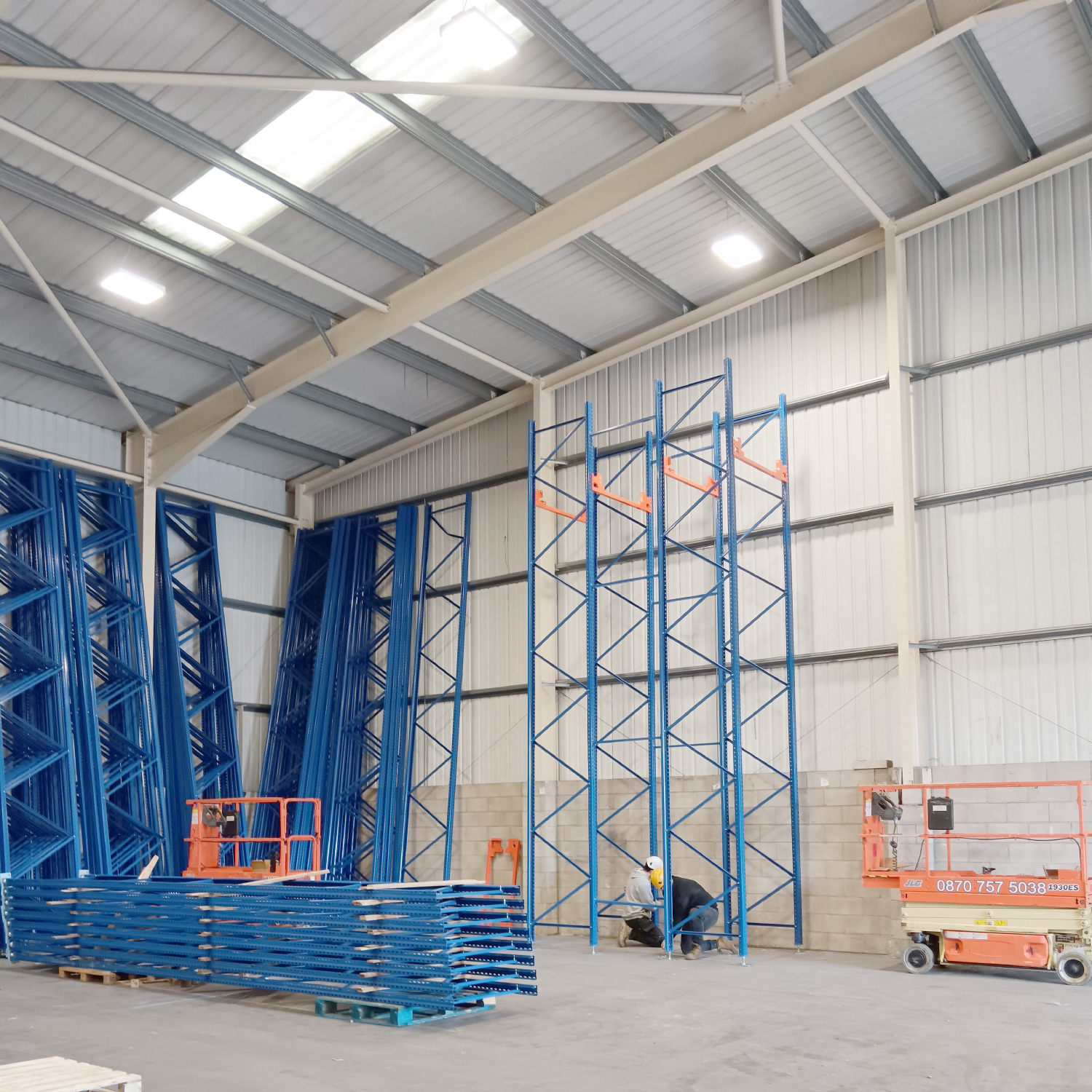
Over the past two decades, the UK — like the rest of the world — has seen an explosive rise in e-commerce. New warehouses popped up everywhere, and old buildings were converted into logistics hubs at a dizzying pace. According to the ONS report “The Rise of the UK Warehouse,” the number of UK premises used for transport, logistics, and warehousing almost doubled between 2011 and 2021 — an 88% increase in just ten years.
With that kind of boom behind us following the pandemic reopening, one would imagine the market would be overflowing with experienced racking installers competing for work.
Well… no. Not even close.
I searched for accredited professionals and found that SEMA — the Storage Equipment Manufacturers Association — lists racking installers across the country. I sent inquiries to more than ten SEMA members operating in or near Birmingham.
I received… three replies.
Out of ten.
For a job that was practically begging to be taken.
Yes, my clustered racking system looked a little different from the traditional ones they were used to, but racking is racking. It is just metal bars bolted together in the same way. I honestly could not comprehend why the others didn’t even bother to respond.
I’ve been trading online since 2002, and I can confidently say we reply to every email and return every call, and I believe my competitors do the same. We would never allow a good incoming opportunity to just slip away. Yet here, in an industry apparently supercharged by the very e-commerce boom we helped fuel, many companies still operate in the slow, old-fashioned “English gentleman” style — tea first, customers later.
Out of the three quotes I received, one was for £100,000 — roughly 50% more than the entire material cost of the racking itself. Another quoted £60,000, about equal to the material cost. The third came back at £30,000, which sounded far more reasonable.
Naturally, I continued discussions with the 3rd installer. He wanted more technical documents — manuals, schematics, step-by-step guides.
The factory had already provided detailed 2D drawings showing the overall layout and how every component connected. But the installer insisted he needed more. Perhaps he expected something similar to a car owner’s handbook.
I told him, politely,
“Everything is in the drawings. If you run into anything unclear, I’ll work with you to sort it out.”
In the end, I had to assign my own staff to pre-assemble the frames, which cost me an additional £4,000 in labour — plus my own time demonstrating how each component was meant to fit together.
So yes, the installation “challenge” turned out to be more hands-on than I expected. More expensive too. But it taught me a very clear lesson: sometimes the only way to get something done properly is to roll up your sleeves and guide it yourself.
But you may be asking,
“I thought this blog is about building a self-storage business? Why are we talking about warehouse racking?”
You’re right. Enough about the automated wareshouse — for now.
Let’s return to the main plot.
After moving out from our old warehouse at Merit House, the next question loomed: What should I do with the building?
To be honest, setting up a self-storage business was still not my first choice. Like most property owners, my initial thought was simple:
Find a commercial estate agent. See what they can do.
Next Chapter: The Commercial Estate Agent
Subscribe free to my BSS journey — where each step forward reveals another unexpected turn.
Leave a Reply